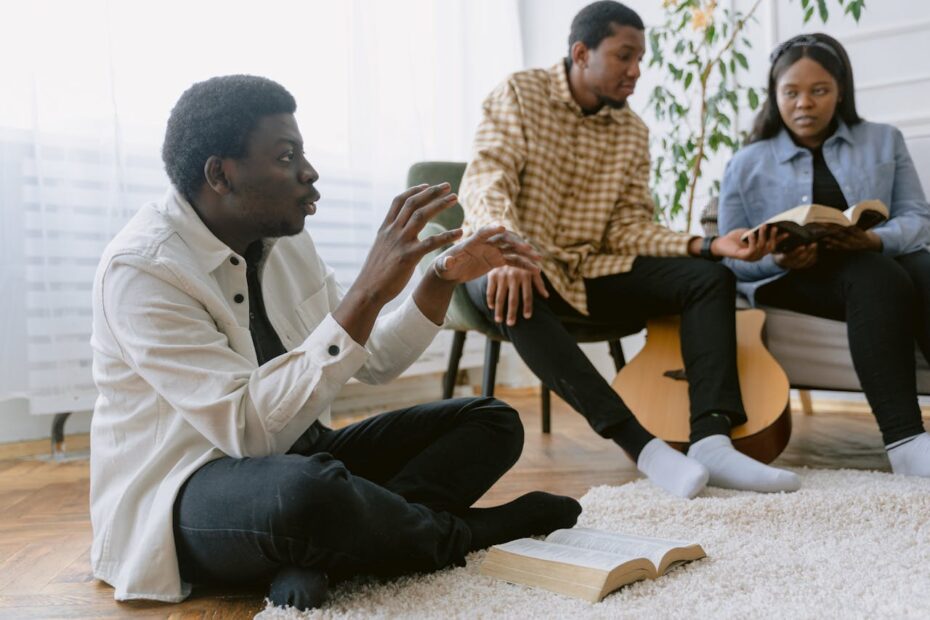
This article on the importance of reading clubs was first presented by Jamilu Abdulrahman (Haiman Raees) at the Special Program of Bakandamiya Reading Club on 25 August, 2025.
It is a privilege to speak on a subject that matters deeply to me. We are living in a restless age, one where so much of our attention is scattered by screens and noise. At such a time, the quiet discipline of reading together is becoming rare. Yet it is precisely this habit, slow, thoughtful, sustained reading, that shapes how we grow as individuals and as a community.
As a member of the Bakandamiya Reading Club, I have seen with my own eyes how a circle of readers can change lives. People come together for what looks like a simple activity, but it becomes much more than that: a place where minds sharpen, where cultural pride is restored, and where unlikely friendships are born.
Nigeria’s wider picture is sobering. UNESCO has spoken of the literacy crisis across Sub-Saharan Africa, and surveys show our reading culture is lagging behind many nations. But I do not believe the solution will come from statistics or government policy alone. The answer is already forming in places like ours, in modest reading groups where ideas are shared freely and knowledge passes hand to hand.
What do reading clubs actually do?
First, they help people think. Reading alone can be powerful, but when you sit with others and discuss a story, you learn to listen, to challenge, to defend your own view without silencing another’s. That habit builds confidence, logic, and imagination. Many of our members have said the club has given them courage to speak, to lead, even to set new personal goals they once thought impossible.
Second, clubs open the door to books beyond the classroom. Too often, school turns reading into a punishment: something tied to exams and nothing more. A club breaks that prison. You might find Achebe on the table one week, Shakespeare the next, or even Hausa poetry from a local author. Slowly, readers realize that books are not burdens; they are passports to new places, new histories, new futures.
And perhaps most precious of all, reading clubs build bridges. In a society as divided as ours, by ethnicity, by religion, by class, they create a space where everyone is equal before the page. Discussions of justice, love, or sacrifice cut across barriers. When we read together, we see our common humanity more clearly than in any debate or argument.
The BRC example
At Bakandamiya Reading Club, our activities go beyond talk. We host community reading sessions, writing workshops, competitions, and professional presentations. Over time, these efforts have created a network that links students, teachers, and aspiring writers. We are still small compared to the need, but we have touched lots of lives. What started as conversations around books has quietly grown into a support system for lifelong learning.
Unspoken challenges
Yet it would be naive to pretend there are no tensions. Which language should clubs emphasize, English, Hausa, igbo? Each carries weight, and each choice shapes identity. Should we focus on global classics, or give priority to African voices? Should clubs remain safe spaces for the educated, or open their doors to those still learning the basics of literacy? These are real debates, often hidden from casual observers, but they matter. They will decide whether reading clubs stay small and elite or become tools of genuine social change.
A call forward
Obstacles remain: poverty, the price of books, and the endless distraction of entertainment. But the hunger for meaning is alive. You see it in every young person who lingers after a session to ask about another book, or in every adult who rediscovers a love for stories they thought they had outgrown.
Teachers, community leaders, parents, we all have a role here. Support these circles, start new ones, invest your time or even a little money. Every club is a seedbed of ideas, and ideas are the roots of progress.
Conclusion
Reading clubs are not a luxury. They are classrooms without walls, forums for dialogue, and vaults for our cultural memory. To nurture them is to nurture Nigeria’s future.
Let us then choose to read together. Let us give space for curiosity, argument, and imagination. And by turning these pages side by side, we may write a brighter, more thoughtful chapter in the life of our nation.